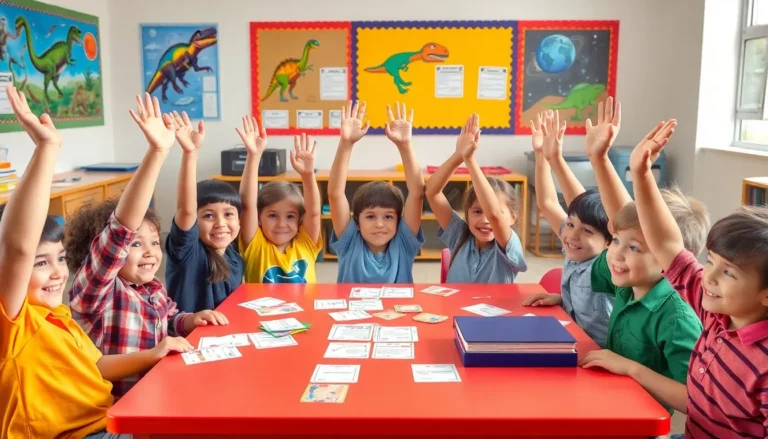
Elementary school is a treasure trove of curiosity where kids ask the most delightful—and sometimes baffling—questions. From the profound “Why is the sky blue?” to the hilariously random “Do fish get thirsty?” these inquiries spark laughter and learning. They reveal a world where imagination knows no bounds and every answer leads to ten more questions.
Understanding Elementary School Questions
Elementary school questions play a vital role in student development. They stimulate critical thinking and promote engagement throughout the learning process.
Importance of Questioning in Education
Questioning enhances comprehension and retention of information. Students who ask questions develop deeper insights into subjects. Inquiry-based learning encourages independent thought while fostering a supportive classroom environment. Teachers often see increased participation when students feel safe to express curiosity. Curiosity-driven classrooms yield a sense of ownership in learning, leading to better academic outcomes. Positive questioning habits contribute to better assessments of student understanding.
Types of Questions Used in Classrooms
Teachers utilize a variety of question types in classrooms. Closed questions often require specific answers, which help assess knowledge recall. Open-ended questions invite students to explore concepts, allowing for creative responses. Higher-order questions challenge students to analyze and synthesize information, promoting deeper learning. Socratic questioning encourages dialogue, pushing students to think critically and articulate their thoughts. Effective use of these question types can enhance discussions, making learning interactive and enjoyable.
Common Elementary School Questions

Elementary school children often ask diverse questions that reflect their curiosity about the world. These inquiries can be classified into several categories, each serving a unique purpose in their educational journey.
Subject-Specific Questions
Subject-specific questions often focus on topics like math, science, and language arts. Students might ask, “Why does the sun shine?” or “How do plants grow?” Such questions encourage deeper exploration of subjects. Engaging with these inquiries enhances understanding of key concepts. Teachers utilize these questions to assess knowledge and gauge interest in various disciplines. Encouraging students to ask subject-specific questions fosters a sense of wonder and promotes active participation in learning.
Behavioral and Social Questions
Behavioral and social questions typically revolve around interactions and relationships. Queries like “Why do friends sometimes argue?” or “What happens when someone feels left out?” arise frequently. These questions allow children to navigate social dynamics and understand emotions. Discussions about these subjects promote empathy and conflict resolution skills. Addressing behavioral inquiries helps establish a supportive classroom environment. Understanding social contexts and behaviors enhances communication skills among peers.
Creating Effective Elementary School Questions
Effective questioning techniques enhance student engagement and foster curiosity. Formulating questions that stimulate thought benefits the educational environment.
Techniques for Formulating Questions
Begin with open-ended questions to encourage deeper thinking. Craft questions that require more than a yes or no answer. Utilize higher-order questioning to prompt analysis and evaluation. Incorporate subject-specific queries, such as “How does gravity affect our daily lives?” Include follow-up questions to extend discussions. Engage students by integrating their interests into questions, which boosts relevance and connection.
Engaging Students Through Questions
Engagement increases when questions encourage exploration. Pose questions that relate to students’ experiences, creating a personal connection. Encourage group discussions around thought-provoking inquiries, enabling collaboration and diverse perspectives. Use prompts that require students to justify their answers, fostering critical thinking. Incorporating visual aids, like pictures or videos, can enhance the questioning process, making discussions more lively and interactive.
Addressing Challenges with Elementary School Questions
Elementary school inquiries contribute to learning obstacles, often rooted in common misconceptions and the need for enhanced strategies.
Common Misconceptions
Students sometimes interpret questions differently than intended. For instance, “Why is the sky blue?” might lead some to believe it’s solely due to reflection. Misunderstandings about scientific concepts often arise from simplistic explanations. Children might think all animals live in water simply because they see aquatic animals during lessons. Misconceptions can hinder critical thinking and limit students’ exploration of subjects. Addressing these misunderstandings requires constant reinforcement of accurate information and framing questions effectively to clarify thoughts.
Strategies for Improvement
Effective teaching strategies help overcome misconceptions. Begin by using open-ended questions that evoke critical thinking. Encourage students to explain their reasoning behind answers. Integrate real-life contexts into questions to create relevance, such as asking how weather affects daily life. Promote discussion among peers, fostering collaborative learning. Utilizing multimedia, like videos and interactive tools, captivates students’ attention and enhances understanding. Regular feedback on answers facilitates students’ progression and encourages them to ask further questions, driving a continuous cycle of inquiry and learning.
Conclusion
The journey of curiosity in elementary school is vital for nurturing young minds. Questions serve as gateways to deeper understanding and engagement. By encouraging children to ask and explore various types of inquiries, educators foster a dynamic learning atmosphere.
This not only enhances critical thinking but also supports social and emotional development. As students navigate their world through questions, they build essential skills that will benefit them throughout their academic careers and beyond. Embracing this inquisitive spirit in the classroom ultimately leads to a richer educational experience for everyone involved.